Big moments
Stories for kids who are scared of the dark
A shadow on the wall, a creak in the hallway, and a familiar bedroom starts to feel strange the moment the light goes out. Being scared of the dark is very common in childhood, and it isn’t your child being difficult. Here’s what’s going on at each age, simple things to try at night, a story to share, and signs that it’s time to ask for help.
· By the Child Fiction team
Why the dark feels scary
In the dark, we can’t see what’s around us, and imagination fills in the blanks: a coat turns into a figure, a creaky floorboard turns into footsteps. In young children, imagination grows faster than the ability to sort what’s real from what’s made up. Bedtime is also when kids separate from you for the night: they’re alone, and the small worries of the day float back up. Night fears are very common between ages 4 and 12, notes the Clay Center for Young Healthy Minds at Massachusetts General Hospital.
- Ages 3 to 4: imagination is running at full speed, and the line between dreams and reality is still blurry. Monsters, wolves, or shadows can seem completely possible.
- Ages 5 to 6: your child knows monsters “aren’t real,” but knowing isn’t always enough. Something they saw during the day or a story they heard at school can come back at bedtime.
- Ages 7 to 8: fears get more realistic, like house noises or what happens while everyone’s asleep. Your child may feel embarrassed to still be scared, and hide it.
Simple things to try at bedtime
- Take the fear seriously, and never tease. “You’re scared of the dark. I get it. I’m right here, and we’ll figure out together what helps.” Even gentle teasing mostly teaches a child to stop telling you.
- Keep the bedtime routine calm and predictable: bath, pajamas, teeth, story, hug, in the same order every night. The American Academy of Pediatrics advises turning screens off in the hour before bed, and it’s wise to skip scary stories or images right before lights out, too.
- Leave a little light on: a soft night-light, the door cracked open, the hallway light. A flashlight within reach lets your child turn the light on themselves.
- Explore the room together. In daylight, then in the evening with a flashlight: where the shadows fall, what makes that clicking sound in the heater, what’s (really) under the bed.
- Play with the dark during the day: a flashlight treasure hunt, shadow puppets on the wall, a blanket fort. The dark turns back into a place to play.
- Promise to check back, and keep your word. “I’ll come peek in on you in five minutes.” Knowing you’ll return often lets a child relax faster than trying to keep you there.
A story to put the fear into words
Stories give children a safe way to name what they feel and to talk about it with you. The Clay Center also warns that some classic tales can frighten young children, so pick comforting stories over scary ones. Timing matters, too: save stories about being scared of the dark for daytime or early evening, when your child is ready to talk, and keep the last read before lights out soft and gentle. The AAP’s “5 C’s” guidance adds that screens shouldn’t be the tool kids rely on to calm down or get to sleep.
Chloe and the Shadow Game
One rainy afternoon, Chloe and Dad closed the blinds in her room and pulled the curtains shut. In the middle of the day, the room turned dark. Chloe turned on her flashlight: time for a shadow hunt.
The circle of light landed on the chair, and a giant chair climbed up the wall. It landed on the bedside lamp, and a big pointy hat appeared on the ceiling. Then it landed on the door, where Chloe’s hooded bathrobe and striped scarf were hanging, and a tall figure rose up, with long arms and a round head. Chloe took a step back. Then she moved her flashlight, and the figure moved with it. “It’s the bathrobe!”
Dad held his hands in front of the light, and a bunny with long ears hopped across the wall. Chloe tried too: a dog, a bird, and a wobbly snail that made them both laugh. They kept playing until snack time.
That night, when the light went out, the tall figure was back on the wall, with its long arms and round head. Chloe looked at it for a moment. Then she smiled under her comforter. “Good night, bathrobe,” she whispered. And she closed her eyes without calling anyone.
Questions to talk about together
- Why do you think Chloe and Dad played with shadows in the middle of the afternoon?
- What did Chloe find out when she moved her flashlight in front of the door?
- What feels a little scary to you when the light goes out?
- What could help you feel cozy in your room at night?
On Child Fiction, you can create an animated story where your child, with family members or a favorite stuffed animal, makes friends with the night in their own way: choose the “Fear of the dark” moment, and the story always stays gentle. Watch it together earlier in the day; in the evening, it’s time to read, for instance our free bedtime story about noises in the night, written to be read aloud.
Common questions about fear of the dark
My child is scared of the dark. What can I do?
Start by listening: what exactly are they afraid of, and when? Reassure them without teasing, keep a calm and regular bedtime routine, leave a little light on, and look together for what soothes them: a stuffed animal, the door cracked open, your promise to check back. Talk about the fear during the day, too, when it feels smaller.
Why is my child suddenly afraid of the dark?
A fear can show up for no obvious reason, simply because imagination is growing. It also often follows a change, like starting school, a move, or a new baby, or an image that made a strong impression during the day. These fears tend to come and go, and most often fade with time.
Should I leave a night-light on all night?
If it reassures your child, yes: choose a dim, warm light, placed so it doesn’t shine right on their face. What matters is that they feel safe in their room.
Can my child sleep in our bed when they’re scared?
That’s a choice each family makes for itself. If you’d like them to stay in their own bed, walk them back calmly, stay with them for a moment, and remind them you’re close by. Our page on sleeping in their own bed offers gentle steps.
What a story can (and can’t) do
A story opens the conversation; it doesn’t replace your presence or a professional’s advice. Research on what books can do here is still limited. One small study of nine children ages 5 to 7, whose nighttime fears had become severe, found encouraging early results with a book based on cognitive behavioral therapy, read by parents and paired with activities. More broadly, a recent review of reading-based programs in schools, aimed at children’s well-being, found promising signs but no strong evidence yet. That’s why we never present our stories as a remedy.
When to ask for help
Fear of the dark is part of growing up and usually fades with time. If it has lasted for several months, keeps your child from sleeping most nights, spills over into the daytime, or comes with very frequent nightmares, talk to your pediatrician, your family doctor, or a child psychologist.
Keep reading
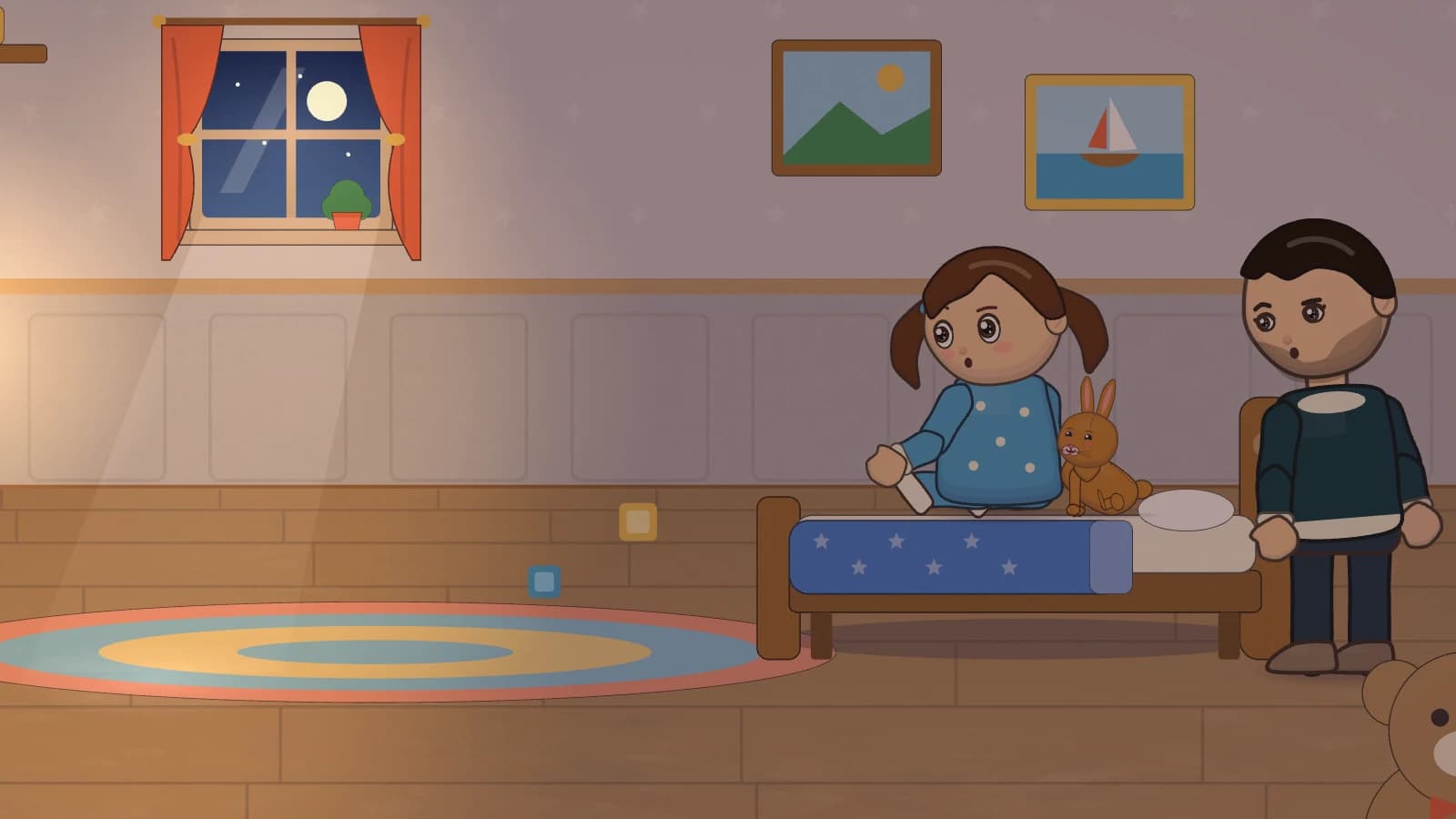
Who’s Making That Noise?
Tap, tap… Hoo, hoo… Glug, glug… Snuggled in bed, Maya hears some funny noises. So she grabs Caramel, her bunny, and her flashlight, and decides to investigate.Ages 3 to 85-minute read7-minute listen- Stories for kids who won’t sleep in their own bed (yet)A reassuring bedtime routine, a bed that feels like theirs, a favorite stuffed animal: gentle steps and a story for kids who won’t sleep alone yet.
- Stories about being brave: trying even when you’re a little scaredOrdering ice cream, a first swim lesson, speaking up: how to help kids be brave one small step at a time, with a short story and questions.
- Low-stimulation shows: how to choose calm screen time for preschoolersSlow pacing, soft sound, a real ending, no ads: how to spot calm, low-stimulation shows for kids ages 3 to 6, and what pediatric guidance actually says.
- Personalized stories for kids: books, audio, or animated?Printed books, audio, apps, or animated stories: how to choose a personalized story with your child’s name and family, while keeping their privacy safe.