Big moments
First day of school stories for preschool and kindergarten
The first day of school is a big leap: a new building, new grown-ups, lots of kids, and a long day away from home. Here’s what your child may be feeling at each age, practical steps to get ready, and a story to read together so you can talk about it before the big day.
· By the Child Fiction team
What your child may be feeling
Your child may be excited in the morning and worried by bedtime, proud of their new backpack and then in tears at the classroom door. Mixed feelings like these are normal: they show your child understands that something is changing. What reassures young kids most is knowing what to expect, and sensing that you feel confident about it.
- Ages 3 to 4, preschool: for many kids, this is the first long stretch away from family. Time is still fuzzy at this age, so “after nap” or “after snack” means more than “at three o’clock.” Your child may cry at drop-off and settle down soon after.
- Ages 5 to 6, kindergarten: school becomes a daily routine, with more structure and a bigger building. Even kids who went to preschool may worry about a new teacher, finding the bathroom, riding the bus, or who will pick them up.
- Around 6, first grade: “big school” can feel intimidating. Your child may worry about learning to read fast enough, getting lost on a bigger playground, or losing touch with kindergarten friends. They understand explanations and appreciate it when you take their questions seriously.
Getting ready, step by step
- Visit the school before the first day. Many schools hold an orientation, an open house, or a “meet the teacher” day, so go if you can. If not, walk or drive past together, look at the playground and the front door, and practice the route from home.
- Walk through the day as it will really be. Drop-off, circle time, recess, lunch, and pickup, plus nap time for younger preschoolers. Name the grown-ups: the teacher, the classroom aide, the friendly face at the front office.
- Shift the schedule a week or two ahead. Moving wake-up time and bedtime a little at a time makes the first morning less of a shock. Keep a calm bedtime routine with a story, and turn screens off at least an hour before bed.
- Get their things ready together. Let them pick a water bottle or lunchbox, label everything with their name, and ask the teacher whether a small comfort item is welcome, like a family photo in their cubby.
- Make up a short goodbye ritual. A hug, a secret handshake, or a phrase that’s just yours, then you leave, without sneaking out. Tell them who will pick them up, and when: “after snack,” “after nap time.”
- On the big day, stay calm and confident. Kids read a lot in a parent’s face. Arrive a little early, say a clear goodbye, and save your own tears for the drive home if they come.
A story to talk it through before the big day
The American Academy of Pediatrics suggests visiting the school ahead of time and keeping a steady bedtime routine that includes reading, and it encourages parents to read with their children from birth through at least kindergarten. A first-day story puts words and pictures to what’s coming: the backpack, the classroom, the goodbye, the hug at pickup. It doesn’t replace the visit or your explanations, but it gives you neutral ground. You talk about what the character is going through, and your child often shares their own feelings along the way.
Clara and the Classroom Plant
On the first morning, Clara held Dad’s hand so tight her fingers turned white. Everything in the classroom was new: the little tables, the bins of toys, and lots of kids she didn’t know.
Before he left, Dad slipped a smooth little stone into her pocket: the goodbye stone. Clara squeezed it once, hugged Dad, and watched him walk all the way down the hall. Then she stood very still by the door.
The teacher crouched down to her height. On the windowsill, she showed Clara a plant with big, droopy leaves and a little green watering can. “This plant is thirsty, and I need someone to take care of it this week. Would you like to?” Clara nodded. She poured the water very slowly, without spilling a drop.
That afternoon, when Dad came back, Clara ran to him and tugged his sleeve. “Come see my plant! Its leaves are all standing up now.” The stone was still in her pocket. She hadn’t needed to squeeze it all afternoon.
Questions to talk about together
- Why do you think Clara held Dad’s hand so tight?
- What was the little stone for? What would you like to keep in your pocket?
- What changed for Clara when the teacher asked her to take care of the plant?
- What do you think you’ll want to tell us about after your first day?
On Child Fiction, you can also create an animated story starring your child: choose the “Starting school” moment, and they go through their first day with family members or a favorite stuffed animal by their side, in a story that always stays gentle. Watch it together, then talk about it. And at bedtime, Tom’s story about his big backpack is free to read aloud.
Common questions about starting school
How early should I start talking about the first day of school?
For a 3-year-old, a week or two ahead is often enough; beyond that, the wait gets long and abstract. You can mention it earlier in small ways, like walking past the school or reading a story, then get more specific in the last few days. Older kids like to know a bit sooner what to expect.
My child cries at drop-off every morning. What should I do?
Tears at drop-off are common in the first weeks, and they often stop soon after you leave, so ask the teacher how the rest of the morning goes. Keep the goodbye short and the same each day, and try not to come back once you’ve left. If the tears don’t ease as the weeks go by, talk it over with the school staff.
Can my child bring a stuffed animal to school?
Many preschools allow a comfort item, at least for nap time; some ask that it stay in the cubby or backpack. Check with the teacher. A small reminder of home, like a family photo in the backpack or a note in the lunchbox, can also bridge the day.
How can I get my child ready for kindergarten?
Talk about what’s changing (a bigger school, learning to read, maybe a bus ride) and what stays the same: friends, play, and grown-ups who look out for them. Reassure them that nobody expects them to read on the first day: that’s exactly what they’re there to learn.
When to ask for help
A few weeks of adjustment are normal. If the tears, morning tummy aches, or sleep troubles last, get stronger, or get in the way of everyday life, talk first with your child’s teacher, then with your pediatrician or family doctor. They can help you decide whether more support would be useful.
Keep reading
Tom’s Big Backpack
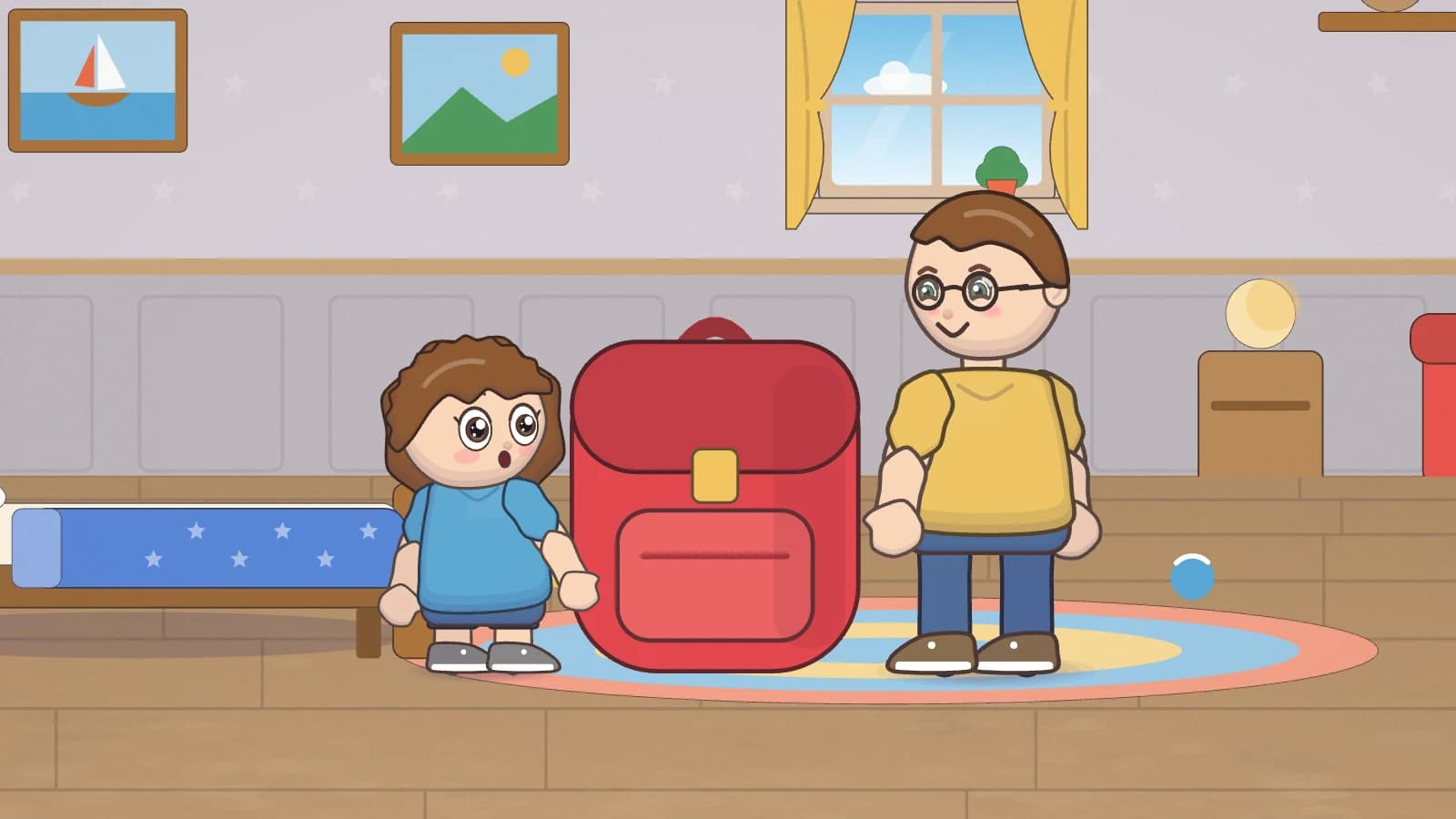
Tomorrow is Tom’s very first day of preschool. His brand-new backpack is so big he could almost hide inside it. But what do you pack for a first day of school, anyway?Ages 3 to 66-minute read7-minute listen- Stories about being brave: trying even when you’re a little scaredOrdering ice cream, a first swim lesson, speaking up: how to help kids be brave one small step at a time, with a short story and questions.
- Stories about self-confidence for kids: trying, slipping up, and trying again“I’m bad at everything”: what to say, how to help your child try, slip up, and try again, plus a shoelace story and questions about self-confidence.
- Stories about moving to a new home for kidsTelling your child about the move, keeping routines, saying goodbye to the old house: practical ideas and a story to help your child feel at home again.
- Personalized stories for kids: books, audio, or animated?Printed books, audio, apps, or animated stories: how to choose a personalized story with your child’s name and family, while keeping their privacy safe.