Values
Stories about self-confidence for kids: trying, slipping up, and trying again
“I’m bad at everything.” “I’ll never get it.” Between ages 3 and 8, self-confidence grows, and wobbles, one attempt at a time. Here’s what to expect at each age, a short story excerpt to read together, and questions to help your child talk about what they can do, what they’re learning, and what makes them doubt themselves.
· By the Child Fiction team
Self-confidence and self-esteem: what’s the difference?
The two often get mixed up. Self-confidence is believing you can try, succeed, or learn; self-esteem is how much you value yourself, whether you succeed or not. A child can doubt themselves at soccer and still feel loved and important. Both grow from the same soil: attempts they’re allowed to get wrong, and grown-ups who notice the effort as much as the result.
Ages 3–4: “I can do it myself!”
Kids this age want to do everything on their own: put on their shoes, pour their juice, carry the grocery bag. It’s slower and messier, but that’s where confidence begins. Give them time, set up kid-size tasks (a small pitcher, slip-on shoes), and resist the urge to finish for them.
Ages 5–6: the comparison years
At school, your child notices that one friend runs faster and another can already write their whole name. The “I’m bad at it” comments start. Instead of arguing (“No, you’re great at it!”), help them get specific: “Writing feels hard right now. What part is hard?”
Ages 7–8: grades and what others think
Grades, picking teams at recess, and classmates’ comments carry more weight. Your child needs to know that your love doesn’t depend on how they do, and that getting things wrong is part of learning. Talk about your own flops: kids are often relieved to hear that grown-ups start over, too.
Everyday situations
- Shoelaces: they get frustrated and toss the shoe. Suggest a break, then one step at a time: today the first loop, tomorrow the second.
- The drawing that didn’t turn out: “My horse looks like a dog.” Ask what they were going for and what they’d change. Keep the drawing: in three months, you can compare together.
- The school play: rehearse at home in front of the stuffed animals, then in front of the family. Stage fright is normal, even for grown-ups.
- A friend’s comment: “You run like a baby.” Listen first, then figure out together what they could say or do next time.
- A new activity: karate, piano, swimming… Agree together on a number of classes before deciding to quit: you can’t judge an activity on the first try.
A story excerpt to read together
Tying laces, missing, trying again: in this passage, Mila goes through what many kids go through before they master something new. For a whole story on the same theme, free to read, try Zoe Can’t Whistle (Yet).
Mila and the Bunny Ears
Mila wanted to tie her shoes all by herself, like her big cousin. She made one loop, a nice straight bunny ear. Then a second one. But when she tried to cross the two ears, everything came undone.
“I’ll never get it,” she sighed, pushing the shoe away.
Grandpa sat down on the floor next to her.
“You know how to make one ear,” he said. “This morning, you didn’t. Want to look at the second one together?”
Mila started again. One ear. Two ears. She stuck out her tongue as she crossed them, very slowly. The knot held. It was a little crooked, with one ear bigger than the other.
“A bunny that only listens on one side,” said Grandpa.
Mila burst out laughing. Then she untied her shoe and tied it again, just to see. And once more. By the end of the afternoon, she had tied the shoes of the whole family, even Grandpa’s, who hadn’t asked for quite that much help.
Questions to talk it over
Let your child tell you what they understood before you share your own thoughts. These questions invite them to explain what Mila goes through, then to look at their own progress.
- Why do you think Mila pushed her shoe away?
- What did Grandpa point out to her? Why did that help?
- Why did Mila tie her shoe again and again, even after she’d done it?
- What’s something you couldn’t do before, but you can do now?
Tips for parents
- Describe instead of labeling: “You started that puzzle over three times” works better than “You’re so smart.” Your child sees what’s up to them.
- Add the word “yet”: “You can’t do it yet” leaves the door open.
- Give them real responsibilities: watering the plants, picking out apples at the grocery store, carrying the bread. A useful job, seen through to the end, means a lot.
- Don’t fix everything: wait a few seconds before stepping in. They often figure it out on their own.
- Skip comparisons, even flattering ones: “You read better than your cousin” sets up a contest they’re bound to lose someday.
Being the hero of the story, and then what?
Kids love seeing themselves as the hero: a story close to their life and who they are grabs their attention. A framework proposed by two researchers (Kucirkova and Littleton, 2020) suggests balancing that focus on the self with other points of view: in a good story, the hero needs other people, makes mistakes, and tries again. After reading, ask your child what the hero did when it didn’t work, then what they do themselves in those moments.
When you create a story on Child Fiction, you can choose self-confidence as its value: the adventure is then designed so your child gets better at something by practicing, and nobody laughs at their mistakes. No story builds self-confidence on its own, but watching this one together gives you a starting point for talking about it. You’ll find more ideas in our guide to values and stories.
Common questions
How can I help my 5-year-old feel more confident?
Let them try things within reach on their own, describe their efforts, give them small responsibilities, and take mistakes in stride. At this age, comparisons with other kids begin: help them look at their own progress rather than their friends’.
My child says “I’m bad at everything.” What should I say?
Don’t rush to argue. First acknowledge the feeling (“You sound discouraged”), then help them get specific: bad at what, and since when? Remind them of something they learned recently. If these thoughts come back often, come with sadness, or keep them from going to school or playing, talk with your child’s doctor or a child psychologist.
What are good stories about self-confidence for kids?
Stories where the character doesn’t get it right the first time, keeps going, and finds their own way of doing things, without becoming “the best.” You can read Zoe Can’t Whistle (Yet), one of our free bedtime stories, then ask your child how Zoe felt along the way.
Keep reading
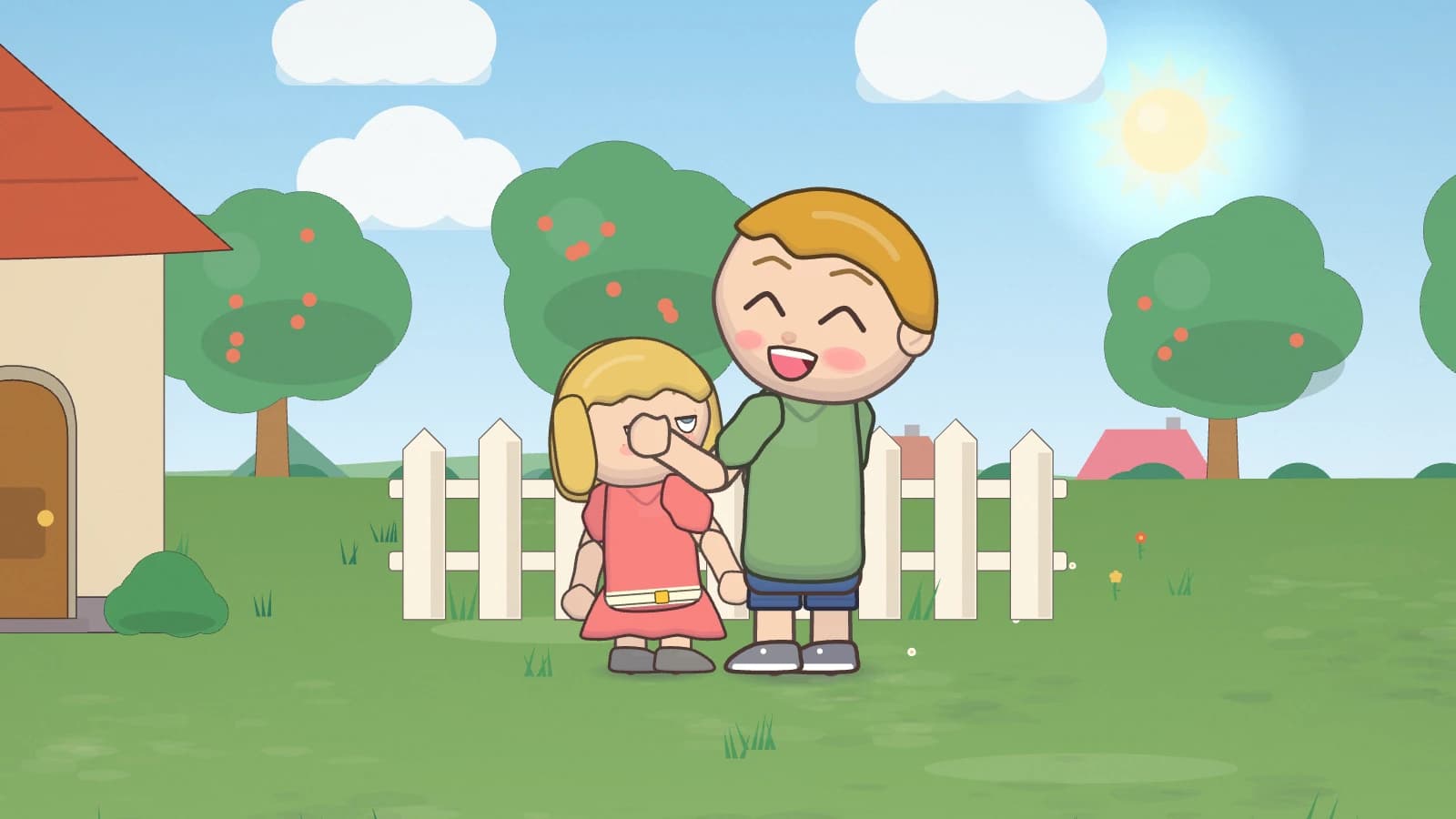
Zoe Can’t Whistle (Yet)
Her big brother, Hugo, whistles from morning till night. Zoe can round her lips all she wants, but nothing comes out except air. Pfff…Ages 4 to 84-minute read5-minute listen- Teaching kids values through stories (without the lecture)Sharing, courage, honesty: how stories help you talk about values with your child without lecturing, plus simple questions that get kids thinking.
- Stories about being brave: trying even when you’re a little scaredOrdering ice cream, a first swim lesson, speaking up: how to help kids be brave one small step at a time, with a short story and questions.
- Personalized stories for kids: books, audio, or animated?Printed books, audio, apps, or animated stories: how to choose a personalized story with your child’s name and family, while keeping their privacy safe.