Big moments
Stories about moving to a new home for kids
Boxes everywhere, a bedroom emptying out, an address they’ve never seen: for a child, moving means leaving what they know without always knowing what’s next. Here’s how to share the news at each age, keep things familiar on moving day, say goodbye to the old home and hello to the new one, with a story to talk it through together.
· By the Child Fiction team
What your child may be feeling
Even when the move is good news for the family, a child may experience it as a loss: their room, their school, their friends, the walk to the park. They may also be excited and curious about their new room. These feelings can change from one day to the next, and they don’t always come out in words. A worried child may get cranky or clingy, or sleep less well for a while.
- Ages 3 to 4: it’s hard to picture a place they’ve never seen. They may think their toys will vanish into the boxes, or that their bed is staying behind at the old house.
- Ages 5 to 6: they understand the plan but worry about what they’re losing: their teacher, their friends, their playground. They need to know, in concrete terms, what’s waiting for them.
- Ages 7 to 8: friendships and activities matter a lot. Your child may be angry they weren’t asked, and they need you to really listen, even though the decision has been made.
Getting ready for the move together
- Share the news early enough, in simple words: why you’re moving, where, and what stays the same (family, favorite stuffed animal, routines). A few weeks’ notice is often enough for younger kids; older kids appreciate knowing sooner.
- Show them the new place. Visit if you can; otherwise, share photos of the house, their future room, the school, the nearest park. Draw a floor plan of their room together and let them choose where the bed goes.
- Let them help pack. They fill and decorate their own box, and put together a small “first night box” (stuffed animal, pajamas, favorite book) that rides with you, not in the moving truck.
- Keep routines going, even among the boxes. Same mealtimes and bedtime, same bedtime story, same song. The Child Mind Institute notes that younger children thrive on routine and predictability, and that familiar objects help: when everything around them is changing, the things that stay the same are reassuring.
- Plan the goodbyes: a last walk through the house, photos of their room, a playdate with friends, and an address or phone number to stay in touch.
- Set up their room first. On the first night, finding their bed, their things, and their stuffed animal in a room that’s all set up often does more than any pep talk.
A story to rehearse the big change
A moving story lets your child “rehearse” what’s coming: the boxes, the truck, the new room, the first night. It also opens the door to talking about what you’re leaving behind, without your child having to say “I’m sad” for you to hear it. And during these busy weeks, hold on to your shared reading time: the American Academy of Pediatrics notes that reading together often strengthens the bond between children and their parents.
Arthur Says Goodbye to the House
On the last morning, the house was full of taped-up boxes, and Arthur had an important job: drawing on each one where it should go. A spoon for the kitchen, a bed for his room, a bathtub for the bathroom. The movers studied his drawings and nodded very seriously.
When the truck was full, Arthur went back into his room one more time. He put his hand on the wall, right where the pencil marks of his height used to be. Mom handed him a pencil. “Want to leave a little secret?” Behind the door, way down low, Arthur drew a tiny sun. Nobody would ever see it, except someone who looked very carefully.
That evening, in the new house, there were still boxes everywhere. But the one with a little bed drawn on it was already open, and Arthur’s bed was set up, with his blue blanket and his bunny.
Before lights out, Arthur took the pencil again and drew a second sun behind his new door, way down low. “There,” he said. “Now the two houses have the same secret.”
Questions to talk about together
- Why do you think Arthur put his hand on the wall of his room?
- What are the two little suns for?
- What would you like to find first in your new room?
- What will you miss about this place? And what are you excited to discover there?
On Child Fiction, your child can be the hero of an animated story about their move, surrounded by family, pets, or a favorite stuffed animal: choose the “Moving to a new home” moment, and the story always stays gentle. Their story world follows them from one episode to the next, just as their memories will follow them from one home to the next. At bedtime, you can also read them Milo’s story about his new room, free and written to be read aloud.
Common questions about moving with kids
How do I tell my kids we’re moving?
Pick a calm moment and say it simply, before they overhear it somewhere else: where you’re going, why, and what won’t change. Let them react, even if it’s not the reaction you hoped for, and come back to it several times: young children need to hear the same explanation often before it sinks in.
Is moving hard on a child?
It depends on their age, their temperament, and what the move changes for them: school, friends, activities. Many kids find their footing within a few weeks, especially when family routines stay the same. Pay extra attention to older kids, for whom leaving friends can be truly heartbreaking.
Should we move in the middle of the school year?
When you have a choice, many families prefer to move over the summer so their child starts the year at the same time as everyone else. If that’s not possible, give the new school a heads-up, ask whether your child can visit the classroom before their first day, and look through our tips for starting school.
My child hasn’t been sleeping well since the move. Is that normal?
A few restless nights are common: the sounds, the light, and the smells have all changed. Keep the same bedtime routine as before, set up their familiar things, and leave a night-light on if it helps them feel safe. If the trouble lasts several weeks, talk to your pediatrician.
When to ask for help
Some sadness, anger, or tiredness is normal after a move. If, after several weeks, your child still seems withdrawn, is sleeping or eating noticeably less, or if the move comes on top of other big changes in the family, talk to your pediatrician, your family doctor, or a child psychologist.
Keep reading
Milo’s New Room
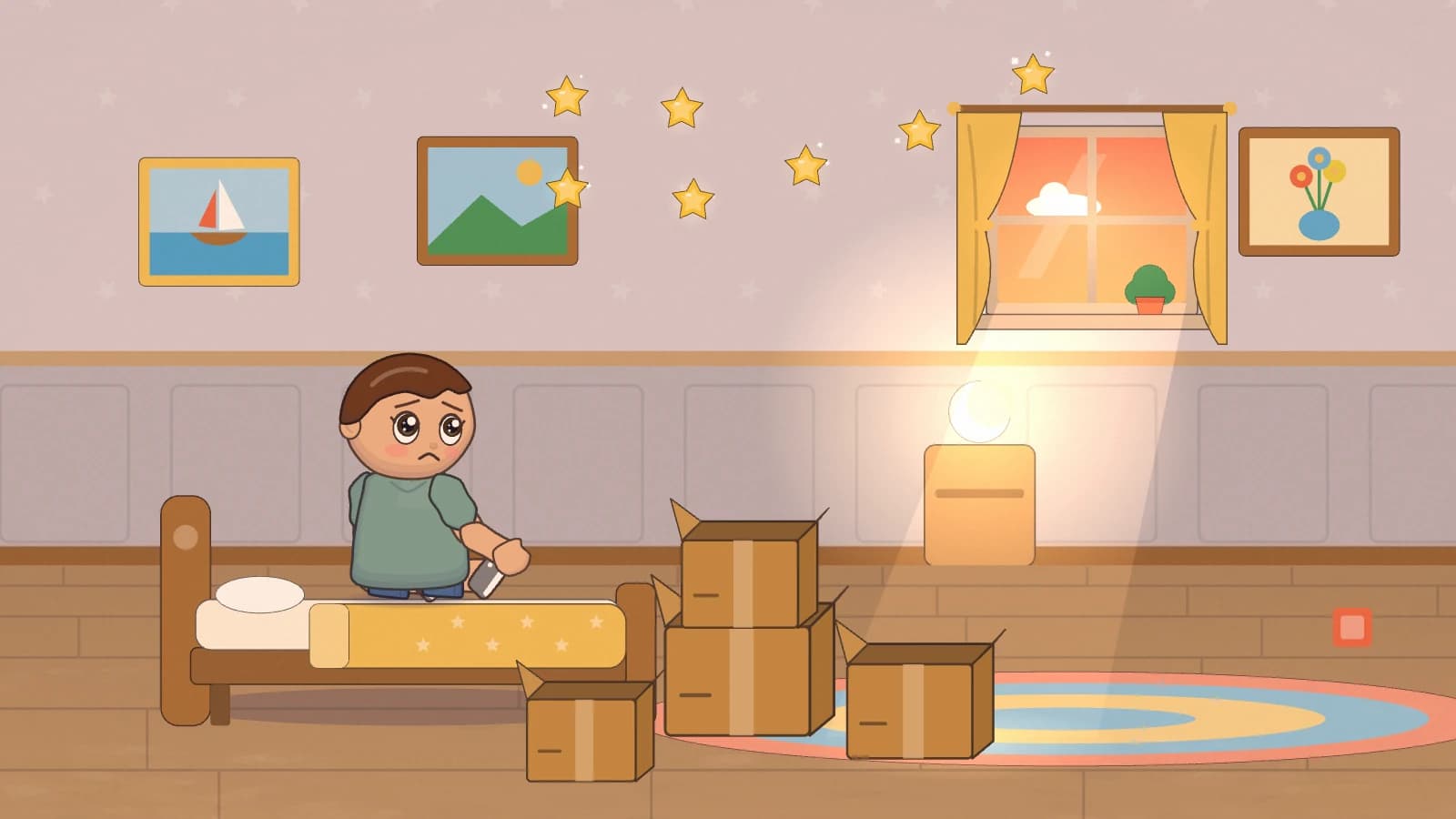
Milo is leaving his room with the stars for a house he has never seen. There, his new room is all white and all empty… and it repeats everything he says.Ages 3 to 85-minute read6-minute listen- First day of school stories for preschool and kindergartenVisiting the classroom, practicing the goodbye, reading a story together: practical ways to get your child ready for preschool or kindergarten.
- Stories for kids who won’t sleep in their own bed (yet)A reassuring bedtime routine, a bed that feels like theirs, a favorite stuffed animal: gentle steps and a story for kids who won’t sleep alone yet.
- Stories about being brave: trying even when you’re a little scaredOrdering ice cream, a first swim lesson, speaking up: how to help kids be brave one small step at a time, with a short story and questions.
- Personalized stories for kids: books, audio, or animated?Printed books, audio, apps, or animated stories: how to choose a personalized story with your child’s name and family, while keeping their privacy safe.