Big moments
New baby sibling stories: becoming a big brother or big sister
A new baby is on the way, and with the baby comes big news for your older child: they’re about to become a big brother or big sister. Pride, curiosity, and the fear of losing their place can all show up at once. Here’s how to get them ready at each age, a story to share, and questions to talk it through together.
· By the Child Fiction team
What your older child may be feeling
For a child, a new baby changes a lot at once: how much time they get with you, how the house sounds, sometimes even their bedroom. They may be thrilled in the morning and jealous by dinnertime, adore the baby and wish the baby would go back where they came from. These mixed feelings say nothing about how much they’ll love their sibling. They say your child needs to feel sure of their place.
- Ages 3 to 4: nine months feels endless, and the baby stays abstract. Your child may start talking like a baby, ask for a pacifier or a bottle again, or have potty accidents. This is common and usually passes.
- Ages 5 to 6: they understand more of what’s coming and love being “the big kid.” But they also notice everything the baby gets without even trying, and they can feel left out when visitors only have eyes for the newborn.
- Ages 7 to 8: they can truly help and feel proud of it. They ask precise questions (how the baby got in there, why babies cry so much) and may keep a sadness to themselves that they can’t quite name.
Getting your older child ready, step by step
- Share the news yourselves, before they hear it from someone else. For younger kids, tie the due date to something concrete: “when it’s summer,” “after your birthday.”
- Describe the baby as they’ll really be: newborns sleep a lot, cry to say they’re hungry, and can’t play yet. A child who’s expecting a playmate may feel let down.
- Make big changes well before or well after. A new room, a big-kid bed, starting preschool: if you can, keep them from landing right at the birth, so your child doesn’t feel pushed out by the baby.
- Plan for the birth. Tell them who will take care of them while you’re at the hospital, where they’ll sleep, and when they’ll get to meet the baby.
- Give them a real role, sized to their age: picking out the baby’s outfit, singing a song, handing you a diaper. Younger kids often love a doll to practice holding a baby.
- Keep some time just for the two of you. Ten minutes a day, without the baby, where your child picks the activity. That little date often means more than any present.
A story to talk it through together
Reading children’s books about newborns and siblings with your older child is part of the American Academy of Pediatrics’ advice for getting ready for a new baby. ZERO TO THREE notes that sharing these stories helps a first child understand what’s happening and what’s to come, and the Child Mind Institute suggests connecting the news to a book or character your child already loves. A story also lets you talk about jealousy without blaming anyone: it’s the character who feels it, and your child can tell you, if they want to, that they feel the same way.
Gabriel’s Storytime Basket
Every time Lou got hungry, it was the same thing: Mom sat down with her on the couch by the window, and it took a long time. A really long time. Gabriel wandered around the living room, dragging his red truck behind him. “Again?” he sighed. “That baby eats all the time.”
That day, Mom pointed to a wicker basket next to the couch. Inside were three books, a dinosaur puzzle, and a box of brand-new crayons. “This is your basket,” she said. “We only open it while Lou is eating, and you get to choose.”
Gabriel pulled out the farm animal book. He couldn’t read the words yet, but he knew every picture by heart. He sat on the footstool, right up against the couch, and told the story his own way: “That’s the cow. And that’s the pig, rolling in the mud. Yuck!” Mom laughed and asked him what the duck was up to.
When Lou was done eating, Gabriel carefully put the book back in the basket. The next morning, he was the first one to hear Lou wake up. “Mom, Lou’s hungry!” he announced, hurrying to the living room. “I’ll get my basket.”
Questions to talk about together
- Why do you think Gabriel wandered around while Lou was eating?
- What was in the basket, and who got to choose? What would you put in yours?
- Why do you think Gabriel hurried to get his basket the next morning?
- What would you like to do with the baby? And what would you like to keep just for you?
On Child Fiction, your child can star in an animated story about welcoming a baby into the family: choose the “A new baby in the family” moment, and they go on the adventure with their parents, grandparents, or favorite stuffed animal, in a story that always stays gentle. You can also read Ines’s story about her tiny brother aloud, for free.
Common questions about a new baby sibling
When should I tell my child about the new baby?
There’s no single right moment. Many parents wait until the pregnancy shows, or until the second trimester, since nine months feels very long to a young child. What matters most is that they hear it from you, in simple words, and know they can come back with questions.
My potty-trained child has been having accidents since the baby came. Is that normal?
This kind of step backward is common: your child is checking that they still matter and that you’ll take care of them too. Try not to scold them or compare them with the baby, and celebrate what they can do as a big kid. If it lasts for months or comes with other signs that worry you, talk to your pediatrician.
How should I respond when my child is jealous or rough with the baby?
All feelings are okay; hurting isn’t: “It’s okay to be tired of the baby. It’s not okay to hurt the baby.” Offer another way to let it out, like drawing how mad they are or punching a pillow, and keep an eye on moments when they’re alone with the baby.
Should the baby “bring” a present for the older sibling?
Plenty of families do this, and older kids often love it. But the most precious gift is still your attention: when visitors come to see the baby, a word or a question for the older child helps them not feel forgotten.
When to ask for help
A bit of jealousy and a few steps backward are part of adjusting. If your older child seems sad or angry for a long time, if rough moments with the baby keep happening, or if their sleep, appetite, or mood change for weeks, talk to your pediatrician, your family doctor, or a child psychologist. They can help you sort things out.
Keep reading
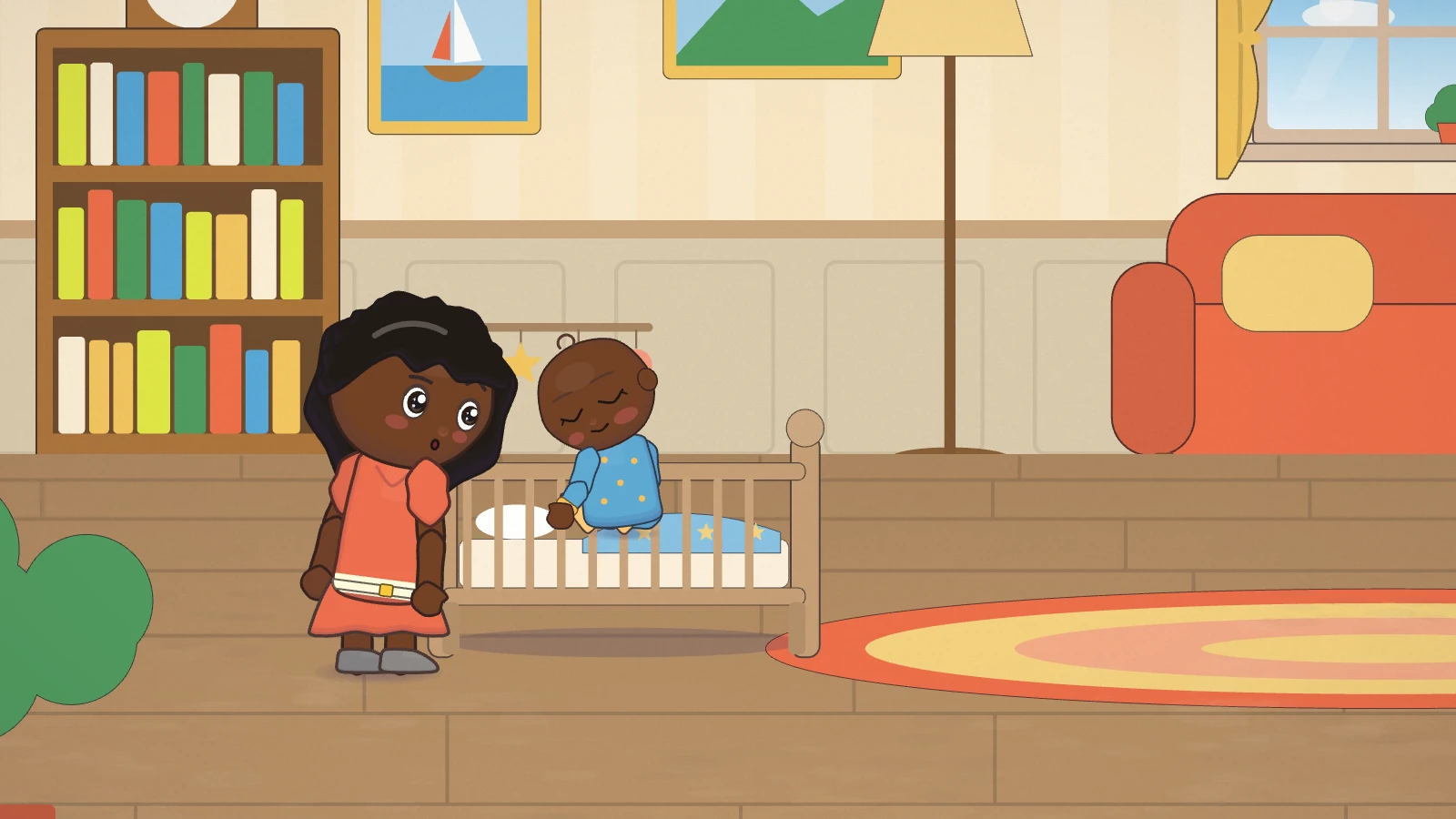
A Tiny Brother for Ines
Ever since Paul came home, the whole house has been whispering, and everyone only has eyes for him. Ines finds her baby brother a bit of a nuisance… until she figures out how to talk to him.Ages 3 to 85-minute read6-minute listen- Stories about patience: helping kids wait (a little)“Is it time yet?” Tricks to make waiting visible, a star-cookie story to read together, and questions to talk about patience with your child.
- Stories about kindness for kids: everyday moments and questions to shareSpotting the kid who’s alone, bringing a stuffed animal to a crying friend: how kindness grows from ages 3 to 8, with a lost-giraffe story and questions.
- Stories for kids who won’t sleep in their own bed (yet)A reassuring bedtime routine, a bed that feels like theirs, a favorite stuffed animal: gentle steps and a story for kids who won’t sleep alone yet.
- Personalized stories for kids: books, audio, or animated?Printed books, audio, apps, or animated stories: how to choose a personalized story with your child’s name and family, while keeping their privacy safe.