Values
Stories about kindness for kids: everyday moments and questions to share
A hug for a friend who’s crying, a drawing for Grandma, a saved seat at lunch: kids’ kindness hides in the smallest gestures. This page helps you spot them at each age, talk about them with a short story excerpt, and encourage them without turning kindness into a chore.
· By the Child Fiction team
What kindness means to a child
For a child, being kind starts with noticing: seeing that a classmate is alone, that a parent is tired, that a little brother can’t reach his toy. Then comes the wish to do something about it. Kindness isn’t the same as manners (saying please and thank you), even though they often overlap: it’s paying attention to how someone else feels.
Ages 3–4: comforting in their own way
A child this age may bring their own stuffed animal to a crying friend: they comfort with what comforts them. That’s already kindness. Since it’s still hard for them to see things from someone else’s side, name feelings for them: “Look, Theo seems sad. What do you think might help him?”
Ages 5–6: friendship and its rules
Friendships matter more and more, and so do the words that sting: “You can’t play with us.” Your child may say them as easily as hear them. It’s a great age to talk about games anyone can join, and about how it feels to be the one left on the sidelines.
Ages 7–8: kind, but not at any cost
Kids this age understand other points of view better and can help without being asked: explaining directions to a classmate, reassuring a younger kid at recess. They can also learn that being kind doesn’t mean going along with everything: you can say no kindly, and be kind to yourself when you make a mistake.
Everyday situations
- At recess: a kid is standing alone by the bench. At dinner, ask your child whether they noticed anyone on their own today, and what someone could do next time.
- At home: setting the table as a surprise, bringing a glass of water to a parent who comes home tired.
- With grandparents: a drawing slipped into an envelope, a phone call to tell them about their day, a song learned just for them.
- With little ones: picking up the spoon the baby dropped for the tenth time, with a smile.
- Out and about: holding the door, returning a glove someone dropped, waving to the mail carrier.
A story excerpt to read together
No grand gesture needed: in this passage our team wrote, at the playground, Margot notices that a child much younger than her is upset. Read it aloud. For a whole story about kindness, also free, try Grandma Rose’s Umbrella.
Margot and the Lost Giraffe
At the playground, Margot was building a sandcastle when she heard someone crying. On the bench, a little boy, much smaller than her, was searching everywhere: under his coat, in the stroller, in his mom’s bag.
“He lost Gigi, his giraffe,” his mom sighed. “We’ve already been all the way around the playground.”
Margot looked at the little boy. She knew what it felt like to lose your favorite stuffed animal: once, she had left Pinpin at her aunt’s house, and the evening had felt very, very long.
So she put down her shovel. “I know all the hiding spots here.” She looked under the slide, behind the big tree, in the grass by the swings. And there, in the little kids’ sandbox, a yellow ear with brown spots was sticking out.
Margot shook the sand off Gigi and handed her to the little boy. He stopped crying right away and hugged her tight. His mom said thank you three times.
The next Saturday, when Margot got to the playground, the little boy ran over to her, waving his giraffe. “Margot! Will you play with Gigi and me?”
Questions to talk it over
Instead of asking “Margot was nice, wasn’t she?”, invite your child to explain what they understood. Their answers will tell you what they notice in other people.
- Why do you think Margot put down her shovel?
- How did she know what the little boy was feeling?
- What happened the next Saturday? Why do you think so?
- Have you ever helped someone who had lost something? How did it feel?
Tips for parents
- Name other people’s feelings, in real life and in books: “He looks disappointed,” “She’s so proud.”
- Point out the effect, not your pride: “Did you see Grandpa’s smile when he opened your drawing?”
- Choose making amends over forced apologies: a “sorry” squeezed out of a child doesn’t fix much. Suggest picking things up, comforting, or making a drawing instead.
- Be kind in front of them, including to yourself: “Oops, my mistake. No big deal, I’ll try again.”
- Act out situations with stuffed animals or action figures: one is all alone, so how can the others invite it to play?
Why a story works better than a lesson
For a young child, the “lesson” of a story is far from obvious. A research review on children and media (Wilson, 2008) notes the same about TV shows where characters help each other: little ones often miss the message on their own, while a follow-up chat or a bit of role-play afterward makes the effect stronger. On top of that, kindness lives in small details a child doesn’t always catch alone: eyes fixed on a pair of shoes, someone hanging back at the edge of a game. A story lets you pause on those details, then look for them together in real life: at school pickup, at the park, with family.
That’s why our free bedtime stories don’t end with a moral: they leave you a few questions instead, and the fun of the conversation. Our guide to values and stories explains the approach, and our page on a new baby sibling has ideas for kindness between brothers and sisters.
Common questions
How do I teach my child to be kind?
More by example and conversation than by instructions. Name how others feel, notice your child’s kind gestures by describing their effect, and let them see you paying attention to others. A story read together gives you a chance to talk about it without your child feeling singled out.
What should I do if my child is being mean to other kids?
First, look for what’s going on: tiredness, jealousy, wanting to fit in with a group, clumsiness. Set the limit calmly (“I won’t let you say that”), suggest a way to make amends, then talk it over once everyone has calmed down, that evening or the next day. If hurtful words or actions keep happening, at school or at home, talk with the teacher, your child’s doctor, or a child psychologist.
What’s a good kindness story for preschool or kindergarten?
A short story with kids or grandparents in a familiar situation, where one kind gesture changes something for someone. Grandma Rose’s Umbrella is one of our free bedtime stories on this theme, to read together.
Keep reading
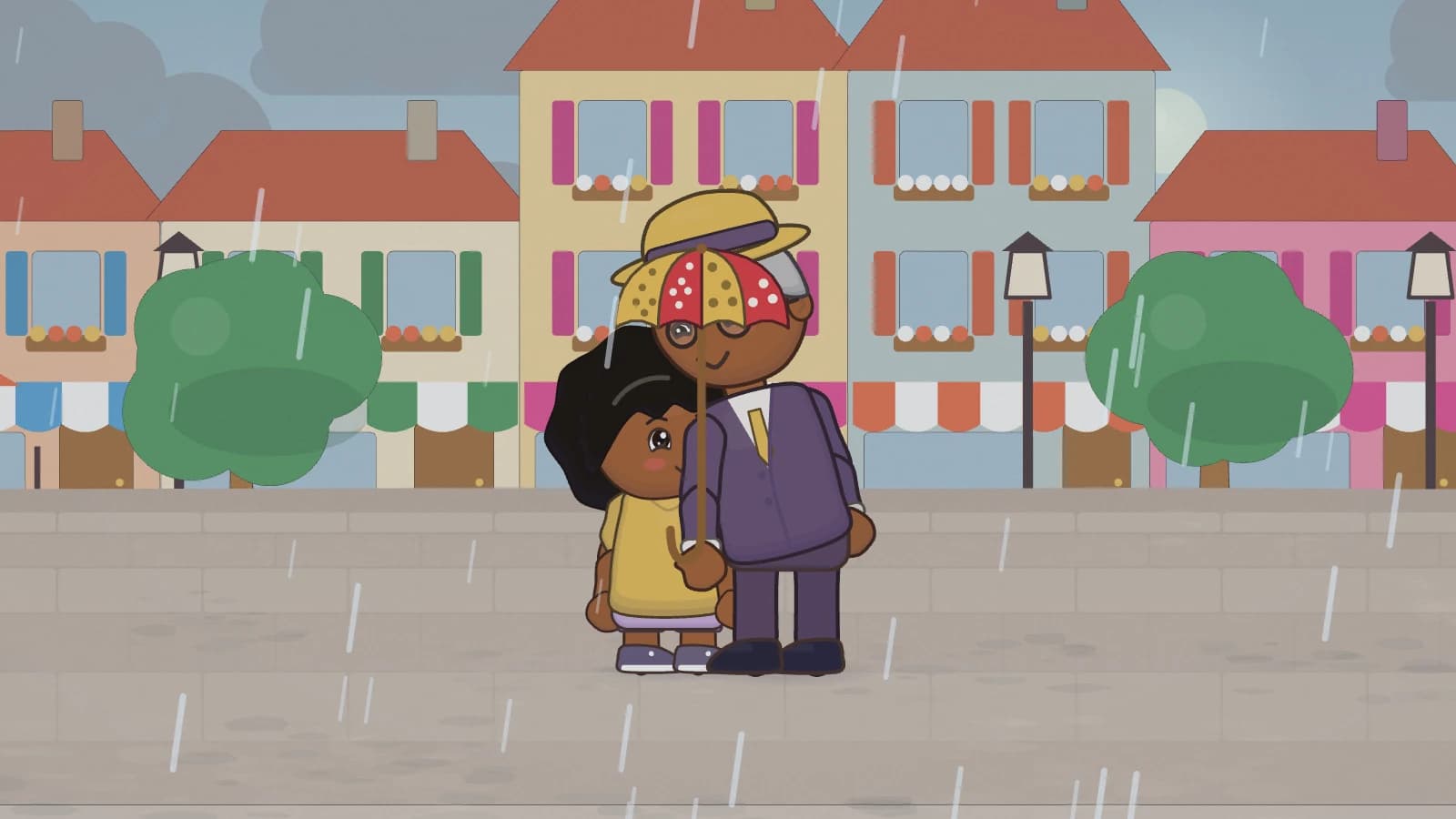
Grandma Rose’s Umbrella
On a rainy Tuesday, Nora walks home from school under her grandma’s giant umbrella. At the bus stop, a boy from her class is standing in the pouring rain…Ages 3 to 84-minute read5-minute listen- Teaching kids values through stories (without the lecture)Sharing, courage, honesty: how stories help you talk about values with your child without lecturing, plus simple questions that get kids thinking.
- Stories about sharing for kids ages 3 to 8“It’s mine!” Why lending is so hard at 3, how to make taking turns work, a sidewalk-chalk story to read together, and questions to ask.
- New baby sibling stories: becoming a big brother or big sisterSharing the news, getting your older child ready, making room for jealousy: practical ideas and a story to talk about a new baby in the family.