Values
Stories about sharing for kids ages 3 to 8
“It’s mine!” Between ages 3 and 8, lending a toy, splitting a snack, or sharing a grown-up’s attention takes real effort. Here you’ll find what to expect at each age, a short story excerpt to read together, and questions to talk it over with your child, no lecture required.
· By the Child Fiction team
Sharing takes time
Sharing doesn’t come naturally. For a young child, lending out a toy truck can feel like losing it forever. Sharing grows little by little, through play, squabbles, and making up. Your job isn’t to force it, but to create lots of moments where sharing feels good.
Ages 3–4: “mine!” is a stage
At this age, kids are discovering that some things belong to them, and it’s hard to believe a toy they lend will ever come back. Instead of insisting they hand it over, try taking turns: “You can play until the sand timer runs out, then it’s Lena’s turn.” Before friends come over, put away a few very special things together (a favorite stuffed animal, a new birthday present): kids share best what they’re ready to lend.
Ages 5–6: it’s all about fairness
Five- and six-year-olds love rules, and “That’s not fair!” becomes a favorite line. Put it to work: cut the cake into equal slices, decide together who goes first, pick a game with room for everyone. They’re also starting to notice when a friend is sad about being left out.
Ages 7–8: sharing ideas, time, and space
Sharing goes beyond toys: letting a friend pick the game, welcoming a new kid onto the team, taking turns telling a made-up story. Kids this age can negotiate, suggest a trade, and say how they feel. They can also learn to say no politely when something matters too much to lend.
Everyday situations
- At the playground: two kids want the same shovel. Suggest taking turns, or look for another tool together (a spoon, a stick), before you step in and decide.
- At snack time: one pack of crackers for three kids. Let your child hand them out; they’ll make sure everyone gets a fair share.
- When a friend comes over: before the playdate, your child picks the toys they’re happy to share and puts away the ones they’d rather keep to themselves.
- Between siblings: the markers, the window seat, choosing the bedtime book… A turn chart posted at kid height heads off a lot of arguments.
- When your child is the one waiting: they get to see the other side of sharing. Help them ask: “Can I have it when you’re done?”
A story excerpt to read together
A sidewalk, a brand-new box of chalk and one color you just don’t want to let go of: read this passage aloud, then let your child react before you ask anything. If you’d like a longer story afterward, Lila’s Big Blanket Fort is free to read aloud and takes just a few minutes.
Alice’s Sidewalk Chalk
Alice had a brand-new box of sidewalk chalk. Twelve colors, including a beautiful blue, the blue of a swimming pool in summer. She was sitting on the sidewalk in front of her house, drawing a sun, when Yanis from next door wandered over.
“Can I use the blue?” he asked.
Alice squeezed the chalk in her hand. Blue was her favorite color. She looked at her sun, then at the long gray sidewalk, then at Yanis, who was waiting with his hands in his pockets.
“You can use the blue if you help me make a river,” she said at last. “A really, really long river.”
Yanis drew the waves. Alice added orange fish. The river ran all the way down the sidewalk to the gate. When Mom came out, she tiptoed along the edge so she wouldn’t get her feet wet, and everyone laughed.
“Tomorrow,” said Yanis, “I’ll bring my own chalk. We can make the ocean.”
Questions to talk it over
Skip questions with only one right answer (“Is sharing good?”). Instead, ask your child to explain what happens in the story: finding their own words is how they connect it to their own life.
- Why do you think Alice squeezed the blue chalk in her hand?
- What changed when they drew the river together?
- How do you think Yanis felt while he was waiting with his hands in his pockets?
- Is there a toy you don’t feel like lending? Why that one?
Tips for parents
- Guide instead of forcing: sharing on command feels like having something taken away. Try “Can he have it when you’re done?” instead of “Give it to him right now.”
- Make turns visible: a sand timer, a song, a kitchen timer. Your child can see their turn will come back around.
- Notice when they share on their own: “You gave your sister half your apple, and she looked so happy.” Describing what happened works better than a general “good job.”
- Share in front of them: offer a bite of your dessert, lend your scarf, let them pick the music in the car. They’re watching you.
- Let them keep a few things: grown-ups don’t lend everything either, and a favorite stuffed animal isn’t just another toy.
Why a story works better than a lecture
A lecture about sharing tends to come at the worst moment: in the middle of a squabble, while your child is still clutching the toy. A story can come later, once everyone has calmed down: your child watches Alice hesitate, then find her own solution, without having to defend themselves. Young children also don’t take much away from a moral stated at the end of a story, and asking them to explain what happens in it seems to help more, as our guide to values and stories explains.
Research on personalized stories is mixed. One study found no effect from a sharing story personalized with the child’s name (Kruse and colleagues, 2021); another, with 315 children ages 5 and 6, found more stickers shared after a personalized story (Kotaman and Balcı, 2025). No story turns a child into a generous sharer overnight: it opens a conversation.
Common questions
At what age do kids learn to share?
There’s no set age. Before 4, lending is often hard, and that’s normal. Taking turns usually comes before sharing on their own. Around 5 or 6, many kids share more easily when the rule feels fair, and more readily with friends than with kids they don’t know.
Should I make my child share?
Guide rather than force. Suggest taking turns, a trade, or a game for more than one player, and let them keep a few special things to themselves. Forced sharing often leaves a sense of unfairness; sharing they choose, even a little, lets them discover what sharing brings.
What’s a good story about sharing for preschoolers?
Pick a short story with kids in a situation they know (the playground, snack time, their room) and an ending where sharing makes the game more fun. You can read Lila’s Big Blanket Fort, one of our free bedtime stories, or make up your own with the toys you have at home.
Keep reading
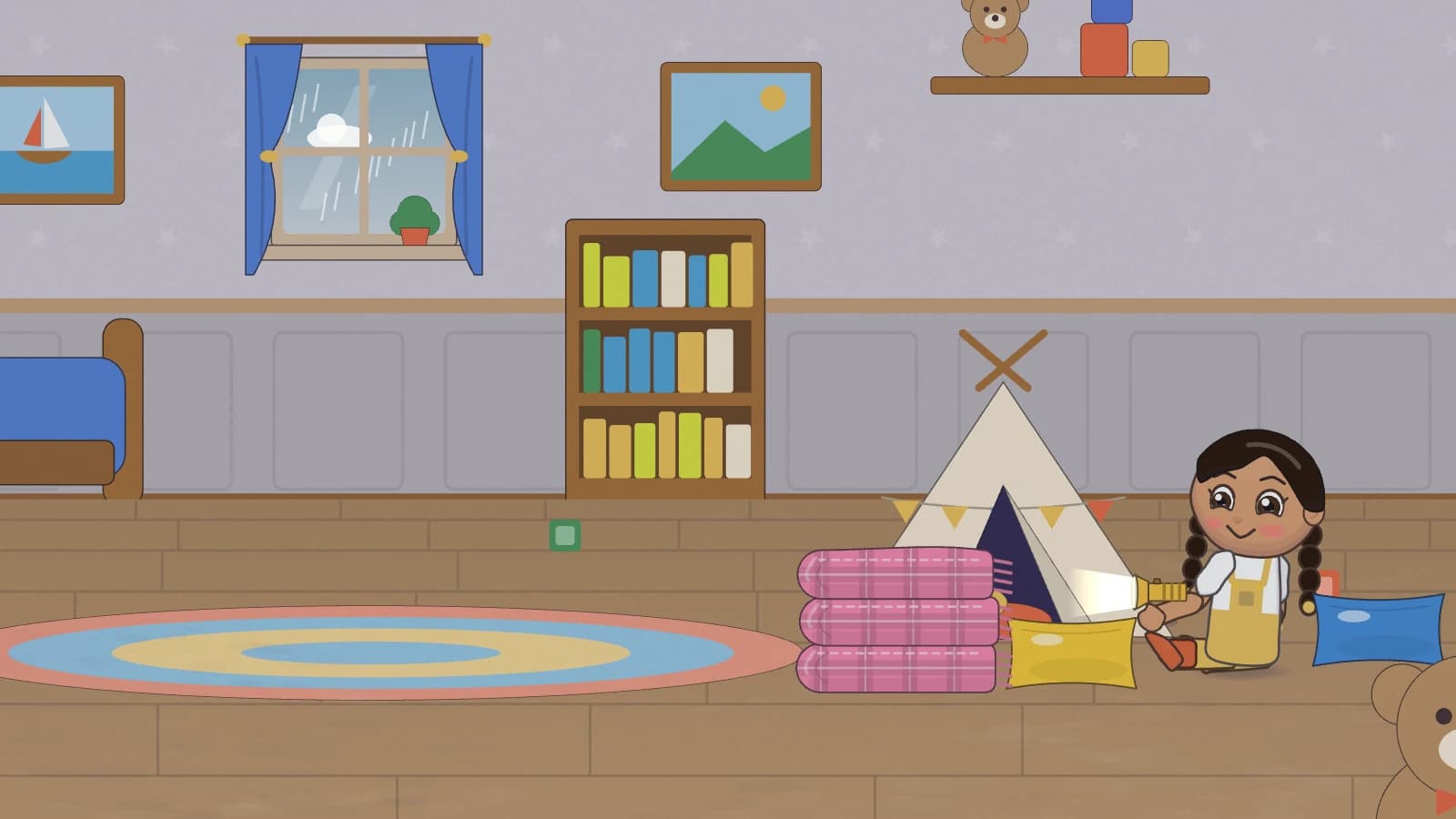
Lila’s Big Blanket Fort
On a rainy Saturday, Lila builds a giant blanket fort in the living room, just for herself. But a fort can be awfully big for just one person…Ages 3 to 75-minute read5-minute listen- Teaching kids values through stories (without the lecture)Sharing, courage, honesty: how stories help you talk about values with your child without lecturing, plus simple questions that get kids thinking.
- Stories about patience: helping kids wait (a little)“Is it time yet?” Tricks to make waiting visible, a star-cookie story to read together, and questions to talk about patience with your child.
- Stories about kindness for kids: everyday moments and questions to shareSpotting the kid who’s alone, bringing a stuffed animal to a crying friend: how kindness grows from ages 3 to 8, with a lost-giraffe story and questions.