Values
Stories about patience: helping kids wait (a little)
“Is it time yet?” “How many more sleeps?” For a young child, waiting is genuinely hard: you can’t see time, and “in five minutes” doesn’t mean much. Here’s what to expect at each age, ideas to make waiting easier, a short story excerpt, and questions to talk it over together.
· By the Child Fiction team
Why waiting is so hard
Patience means coping with wanting something you can’t have yet, and finding something to do in the meantime. Those skills develop slowly throughout childhood. So an impatient child isn’t a spoiled child: they mostly need help seeing time pass and finding something to do while it does.
Ages 3–4: make time visible
“After snack,” “when the big hand is on the 6,” “after two songs”: concrete markers work better than minutes. A sand timer, a calendar where you color in one square each night before a birthday, stickers to add to a chart: anything they can see helps them wait.
Ages 5–6: waiting your turn
Board games, the line for the slide, raising a hand in class: waiting your turn becomes an everyday thing. Your child can pick up tricks for waiting (counting, singing in their head, watching what others are doing) and discover that waiting is sometimes part of the fun, like right before opening a present.
Ages 7–8: long-haul projects
Saving up for a toy, learning a piece of music, growing tomatoes: kids can now take on projects that last for weeks. They need to see their progress (a chart, photos, a see-through piggy bank) and to hear that frustration is part of the journey.
Everyday situations
- In a waiting room: a small “waiting bag” with a notebook, crayons, and a book makes the time go by faster.
- When you’re on the phone: agree on a signal (a hand on your arm) that means “I need you,” and respond as soon as you can.
- While a cake bakes: watch it rise through the oven window, set the table, sniff the air and guess when it’s ready.
- Before a big day (a birthday, a trip, a visit from grandparents): a paper chain where you tear off one link every night.
- During a board game: put them in charge of rolling the dice for everyone, or keeping score while the others play.
A story excerpt to read together
Cookies fresh out of the oven and a sand timer that takes forever: a small wait every child knows, to read slowly. In Sasha’s Little Seed, a free bedtime story to read together, the wait lasts for weeks.
Anna and the Star Cookies
Anna and Dad had made star-shaped cookies. When the tray came out of the oven, the whole kitchen smelled like butter and cinnamon.
“Can I have one?” Anna asked.
“Not yet, they’re way too hot. They need to cool down.”
Dad flipped over the red sand timer from their board game.
“When all the sand is at the bottom, we’ll try them.”
Anna watched the sand trickle down. It took a long, long time. Then she had an idea: while the sand was falling, she got out some paper and drew a star for every person in the family, with their name on it.
The last grain of sand dropped just as she finished Grandma’s star. The cookies were warm and crunchy. Anna placed one on each drawing, and snack time turned into a star party.
Questions to talk it over
There’s no need to wrap up with “See? You have to be patient.” Let your child explain what Anna went through: they’ll often figure out on their own what the wait gave her.
- Why did Dad say “not yet”?
- What did Anna come up with to make the waiting go faster?
- Why do you think snack time was even better in the end?
- What do you do when you have to wait a long time?
Tips for parents
- Be specific and honest about how long: “two stories” instead of “right now” when that isn’t true.
- Give them something to do: waiting is easier when hands and minds are busy.
- Notice when they wait well: “You waited until I finished my sentence. Thank you.”
- Show your own patience, out loud: “It’s really crowded, I’m taking a deep breath, it’ll be our turn soon.”
- Match your expectations to their age: ten minutes of sitting still is a very long time for a 3-year-old.
A story to talk about, and three tools to use at home
Telling a child “Be patient” doesn’t help much: they don’t know how yet. A story shows them a character who finds a trick, and what the wait brings in the end. Look at what helps Anna: she can see time passing, thanks to the falling sand, and she has something to do with her hands. Those are two tools you can use at home, too.
To a young child, time is invisible: a sand timer, a paper chain, or a calendar to color in turns it into something they can see, and even touch. The third tool is less visible: keeping your word. When the sand runs out, you really do try the cookies; when you said “after bath time,” it really is after bath time. Kids find it easier to wait when they know from experience that the wait ends as promised. You’ll find more ideas in our guide to values and stories, and if your child is waiting for a baby brother or sister, on our page about a new baby sibling.
Common questions
How do I help an impatient child?
Make time visible (a sand timer, songs, a calendar), keep their hands busy while they wait, tell them ahead of time what’s going to happen, and notice every time they manage to wait. A tired or hungry child has a much harder time waiting: sometimes a snack solves more than a long talk.
At what age can kids wait patiently?
Little by little. At 3, a few minutes with a concrete marker is already a lot. Around 5 or 6, many kids can wait their turn in a game. Projects that take weeks become possible around 7 or 8, especially when kids can see their progress.
What’s a good story about patience for kids?
A story where someone has to wait for something concrete (a seed sprouting, a cake baking, a birthday), with a character who finds something to do in the meantime. Sasha’s Little Seed, one of our free bedtime stories, is a nice way to start that conversation.
Keep reading
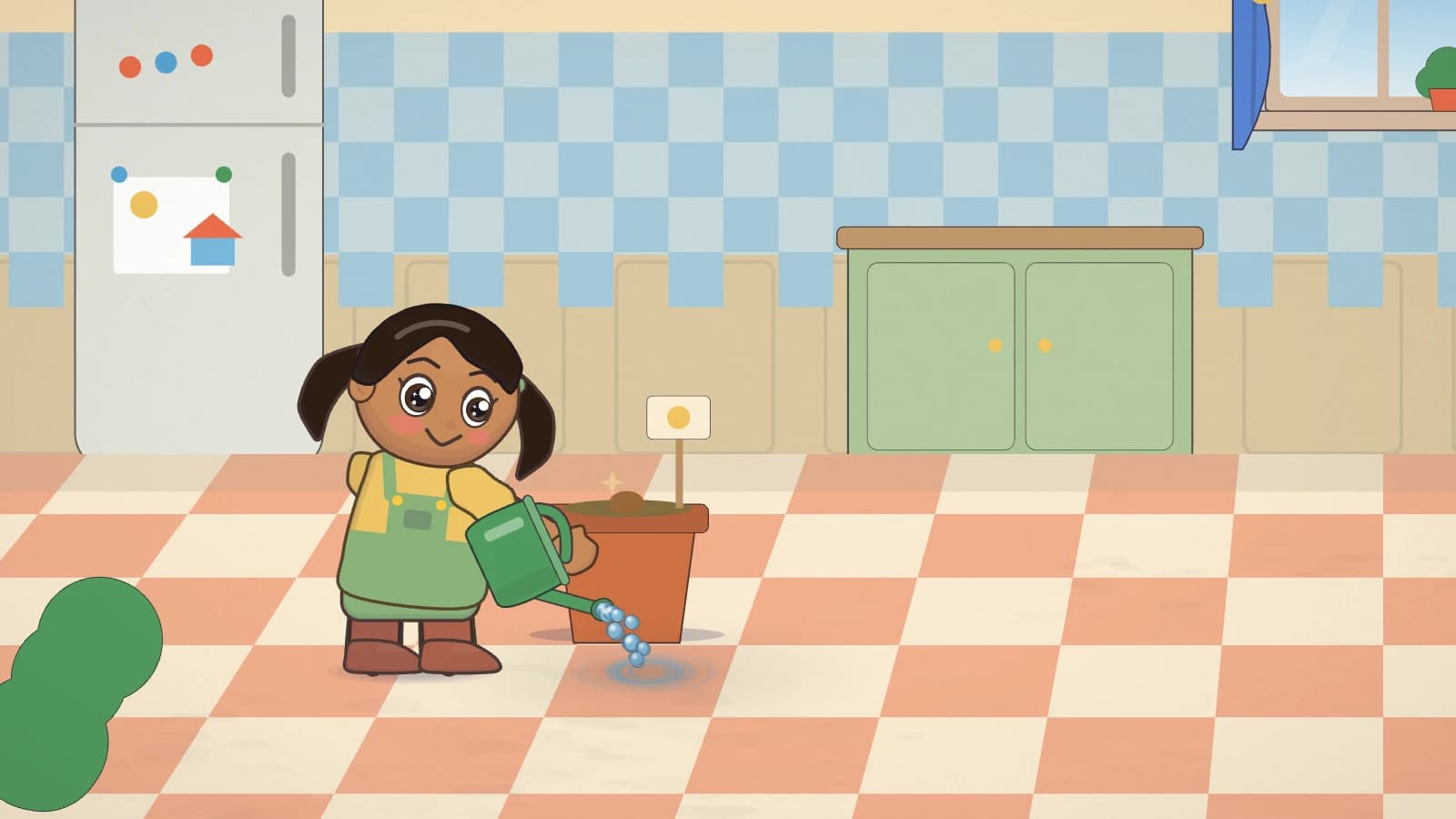
Sasha’s Little Seed
Sasha has planted a sunflower seed. Every morning she runs to check the pot… and every morning, nothing. How do you wait when you can hardly wait?Ages 3 to 77-minute read7-minute listen- Teaching kids values through stories (without the lecture)Sharing, courage, honesty: how stories help you talk about values with your child without lecturing, plus simple questions that get kids thinking.
- Stories about sharing for kids ages 3 to 8“It’s mine!” Why lending is so hard at 3, how to make taking turns work, a sidewalk-chalk story to read together, and questions to ask.
- New baby sibling stories: becoming a big brother or big sisterSharing the news, getting your older child ready, making room for jealousy: practical ideas and a story to talk about a new baby in the family.