Values
Stories about honesty for kids, and what to do when your child lies
A spilled glass of juice, and then the words: “It wasn’t me!” Most kids tell a lie at some point, and it’s rarely a sign that something is wrong. This page helps you understand what’s going on at each age, respond when your child lies, and talk about honesty with a short story excerpt and a few questions.
· By the Child Fiction team
Why kids lie
To tell a lie, a child has to understand that other people don’t know everything they know: that’s a real step in how they think. Kids mostly lie to stay out of trouble, to avoid disappointing you, to get something they want, or because they wish so badly that things had gone differently. Understanding the reason helps you respond without making it a big drama.
Ages 3–4: somewhere between pretend and real
“The cat drew on the wall.” At this age, the line between what they imagine, what they wish, and what actually happened is still blurry. Rather than calling it a lie, rephrase it with a smile: “You really wish it had been the cat! Now let’s clean it up together.”
Ages 5–6: dodging consequences
Now your child knows when they’re not telling the truth, and they mostly lie because they’re afraid of what will happen. The bigger the reaction they fear, the more tempting the lie. This is the time to show them that telling the truth never makes things worse: you fix it together, and you thank them for being honest.
Ages 7–8: white lies and big questions
Your child discovers “nice” lies (“I love your present!”) and lies told to cover for a friend. This is the age for real conversations: are all lies the same? How can you say something true in a kind way? They may also keep some things to themselves to have a little privacy, which isn’t the same as lying.
My child lies: what should I do?
- Stay calm: a big angry reaction mostly teaches kids to hide things better next time.
- Skip the trap questions: if you know who ate the cookies, just say so (“I see the cookies are gone”) instead of asking “Was it you?”
- Thank them for the truth, even when it comes late: “Thank you for telling me. That wasn’t easy.”
- Keep the confession and the fix separate: you don’t punish the truth; you fix the mistake together (wipe it up, glue it back, apologize).
- Lead by example: kids notice our little fibs, like “Tell them I’m not home.”
A story excerpt to read together
This passage our team wrote has nothing to do with mishaps: Iris gets a present she doesn’t quite love and looks for a way to say something true without hurting anyone. It’s a big question at 7 and 8, the age of lies told “to be nice.” For the other side of honesty, owning up to a mistake, read The Blue Vase, one of our free bedtime stories.
Iris and Nonna’s Scarf
For her birthday, Iris got a squishy package. Inside was a scarf Nonna had knitted herself, orange and purple, with a big pom-pom at each end. Nonna was waiting, her hands clasped together. “So? Do you like it?”
Iris wrapped the scarf around her neck. The wool was scratchy. Really scratchy. The words “I love it!” were already on the tip of her tongue, ready to pop out. But Iris didn’t want to tell Nonna something that wasn’t true.
She thought very hard, then she said, “The colors are exactly my favorites. But the wool tickles my neck a little.”
Nonna burst out laughing. “Your dad said the same thing when he was your age! I know just what to do.” She pulled a piece of soft, cream-colored fabric out of her knitting bag.
All afternoon, Iris helped Nonna sew the fabric onto the inside of the scarf. Iris handed over the pins, Nonna made the stitches, and they sang songs Nonna used to sing when she was little. That evening, Iris kept the scarf on for dinner, and then to brush her teeth. “Now,” she said, “it really is my favorite scarf.”
Questions to talk it over
Skip “So what’s the lesson here?” Instead, ask your child to explain what’s going on in Iris’s head: that’s often when they’ll start talking about themselves.
- Why do you think Iris didn’t say “I love it” right away?
- How did she manage to tell the truth without hurting Nonna’s feelings?
- What good things happened because Iris said what she really thought?
- What could you say that’s true and kind to someone who gives you a present you don’t really like?
Why we show what honesty brings
In one study, researchers read children ages 3 to 7 one of several classic stories (Lee and colleagues, 2014). The stories that focused on punishing the liar didn’t make kids more truthful. But a story in which the hero owns up to his mistake and is praised for it increased the number of children who told the truth. Rewritten to stress negative consequences, that same story lost its effect.
That’s why we avoid stories that shame. Classic tales where the liar comes to a bad end are fine to read, of course, but they don’t show a child what to do after a mistake; a story where owning up brings relief and a fix shows them a way forward. If lying becomes very frequent, comes along with other struggles, or worries you, talk with your child’s doctor or a child psychologist. You’ll find more ideas in our guide to values and stories.
Common questions
At what age do kids start lying?
First little lies often show up around age 3 or 4, when a child realizes that other people can’t see everything they think. It’s a step in their development, not a character flaw. What matters most is how the grown-ups around them respond.
Should I punish my child for lying?
It helps to keep the two apart: the mistake calls for a fix (cleaning up, gluing back, apologizing), and the truth deserves a thank-you. Punishing a confession mostly teaches kids to hide better. If your child lied to avoid a consequence, explain calmly that the fix stays the same, but that you’re glad you can trust them.
What’s a good story about lying and telling the truth?
Choose a story where the character tells the truth and gets something good out of it (relief, a way to make things right, trust), rather than one that punishes the liar. The Blue Vase is one of our free bedtime stories on this theme.
Keep reading
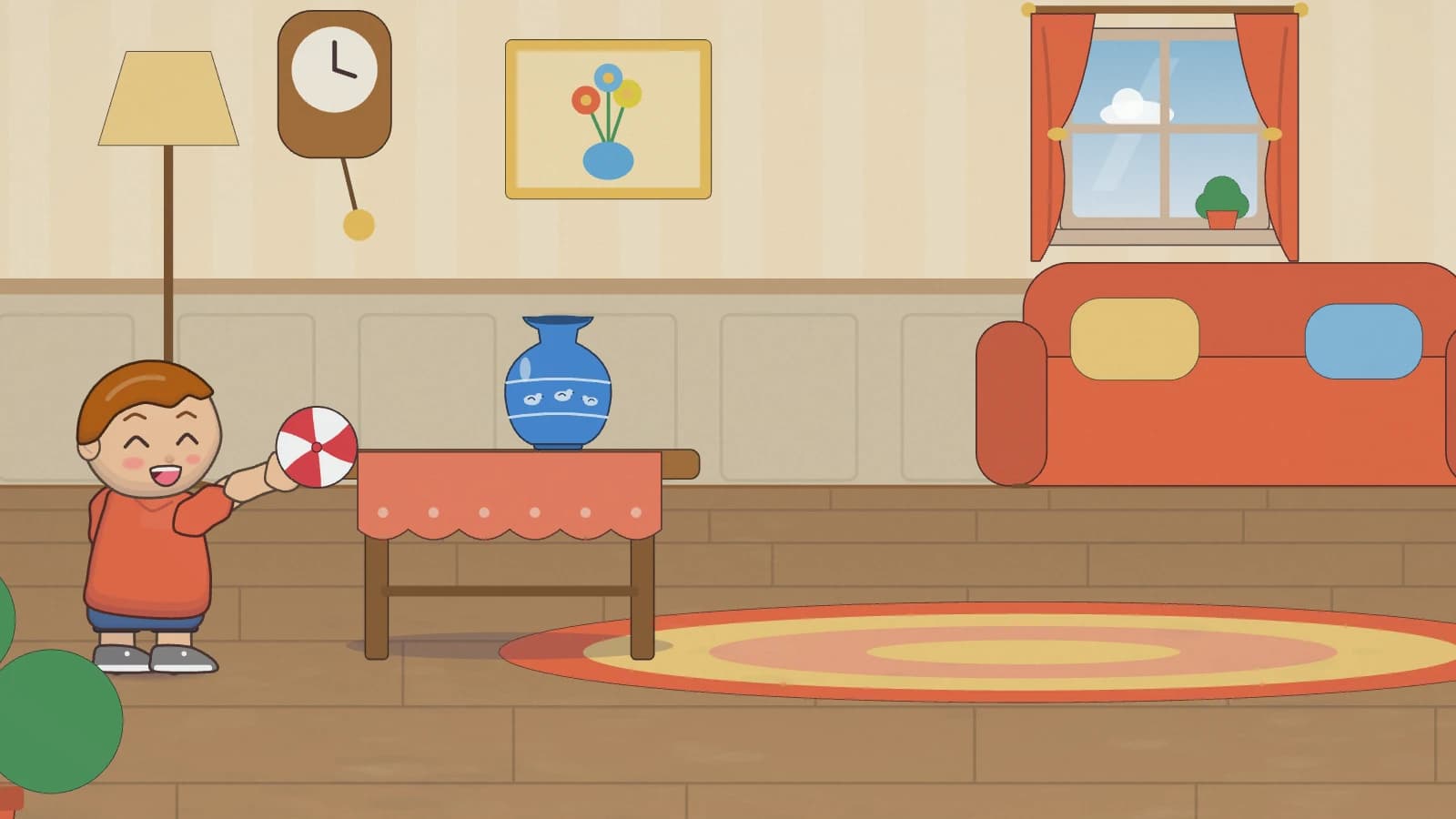
The Blue Vase
Sam was playing ball in the living room, and Mom’s blue vase fell. Nobody saw. But in Sam’s pocket, there’s a little blue piece…Ages 3 to 85-minute read5-minute listen- Teaching kids values through stories (without the lecture)Sharing, courage, honesty: how stories help you talk about values with your child without lecturing, plus simple questions that get kids thinking.
- Stories about being brave: trying even when you’re a little scaredOrdering ice cream, a first swim lesson, speaking up: how to help kids be brave one small step at a time, with a short story and questions.
- Stories about kindness for kids: everyday moments and questions to shareSpotting the kid who’s alone, bringing a stuffed animal to a crying friend: how kindness grows from ages 3 to 8, with a lost-giraffe story and questions.